
Make a Clinic Team Page Easier to Recognize at Reception
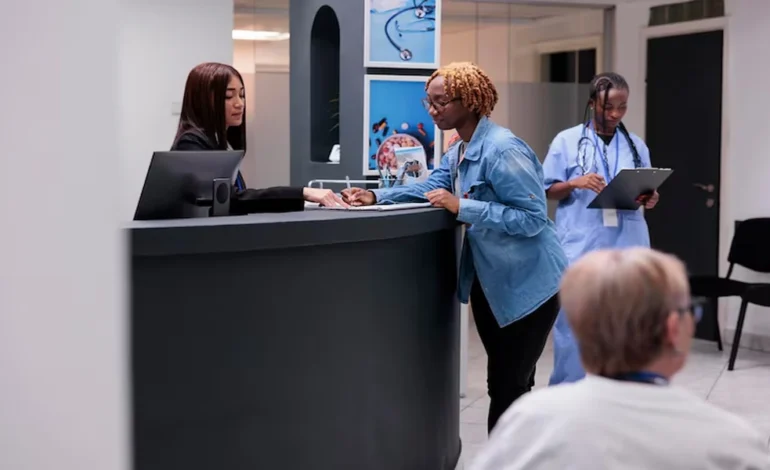

A clinic team page is more useful when a visitor can connect an appointment name with a recognizable person. Current portraits, clear role labels and coordinated updates matter more than a dramatic visual style. Treat the photographs as part of the introduction to the practice, with a narrow job: helping people understand whom they are about to meet.
Start at the appointment message
Review the information a new visitor receives before looking at the photography. The appointment email may use a full name, reception may use a shorter name, and the website may display a different title. Even good photographs cannot resolve that mismatch by themselves. Establish which public name and role label should appear together, using the clinic’s approved wording as the reference.
Then look at the team page from the visitor’s perspective. Can someone find the person named in the message without understanding the clinic’s internal organization? Are former staff still shown? Does a shared team photograph make it difficult to identify the individual practitioner? These are practical publishing questions, not a reason to make assumptions about the quality of anyone’s clinical work.
Decide which people need individual introductions and which need a different form of presentation. A visitor may meet reception staff as well as a practitioner, but the roles are not interchangeable. The directory should make those distinctions clear in text. Avoid expecting clothing, room choice or a prop to communicate a professional role that has not been stated explicitly.
Show the person without borrowing clinical authority
A portrait cannot establish qualifications or treatment outcomes. Those belong in accurate, approved written information. Choose a photographic style that makes the person easy to see and recognize, without relying on equipment or theatrical surroundings to imply expertise. A straightforward photograph can be entirely appropriate even when the broader website contains more detailed images of the facilities.
Discuss what staff normally wear when meeting visitors and whether the proposed wardrobe feels consistent with that experience. The purpose is not to force everyone into the same appearance. It is to avoid a portrait that creates a misleading introduction. If there are organization-specific presentation requirements, give them to the photographer clearly instead of expecting the production team to infer them.
Expressions deserve similar care. Some people naturally offer a broad smile; others look more comfortable with a quieter expression. The directory does not need to turn those differences into a rigid visual formula. Review whether the result feels approachable and recognizable for the individual, rather than asking every person to recreate one colleague’s successful pose.
Test the portrait beside the person’s name and biography. Small profile cards may need a simpler composition than an editorial feature. A busy treatment-room background can become indistinct at that size, while an excessively tight crop can feel cramped. The intended layout should inform capture and selection before the team commits to a gallery of images that need awkward workarounds.
Photograph staff without involving patients
A staff-only portrait session can be planned without depicting an appointment or using visitors as background activity. For a Toronto practice exploring providers, Indigo Visual’s professional headshots provide a relevant service category to discuss. Explain that the brief concerns portraits of identified staff, then confirm the location, setup and deliverables that would suit that purpose.
Select a room or period in which the session will not depend on people moving through a care space. Ask the photographer what the proposed look requires and involve the clinic’s coordinator in deciding what is workable. A room may appear empty in the booking calendar but still contain screens, paperwork or objects that are unsuitable for a public image.
Inspect the set from the camera’s position. A reflection may reveal a display outside the apparent frame, and a noticeboard may contain more information than anyone remembers. Clear or relocate material through the clinic’s normal procedures. This advice concerns production planning; the organization’s responsible staff should determine its privacy requirements and whether the arrangement satisfies them.
Give subjects time to understand where their photographs will be used and how selection will work. Invite any personal or accessibility concerns through an appropriate private contact. The photographer can then receive the practical information needed for the session without unnecessary personal details circulating among colleagues. Clear preparation can make the appointment feel less like an unexpected interruption.
Publish names and images as a single update
Do not send the website editor an isolated gallery and expect the directory to organize itself. Match each approved portrait to the correct public name, role and biography. State which image replaces which existing entry. This is especially important when several staff members share a surname or when filenames are based on numbers rather than recognizable names.
Ask one coordinator to review the assembled page after the images are placed. Check it at a small screen size as well as on a desktop. Confirm that the photographs remain readable, names are attached to the right people, and the appointment information elsewhere on the site does not contradict the directory. A technically successful upload is not the same as an accurate introduction.
Build portrait review into the practice’s ordinary staff-change process. A new arrival, departure or public role change should prompt a check of the directory and related materials. This does not mean ordering a complete new photoshoot each time. It means giving someone responsibility for deciding whether an existing image and description still represent the current team.
Take one approved appointment message and follow the named person through the website to the reception experience. The spelling, role and photograph should tell a coherent story along that route. Where they do not, fix the mismatch before adding decorative complexity. That modest test keeps the portraits focused on recognition, with medical information left to the appropriate professionals and approved text.