Fall Prevention Strategies: Reducing Falls in Hospitals and at Home

Falls represent one of the most common and costly safety events in healthcare settings, and they remain a leading cause of injury among older adults more broadly. Beyond the immediate physical harm, a fall can trigger a cascade of complications, including prolonged hospitalization, loss of independence, and in severe cases, permanent disability. Because falls are largely preventable with the right combination of assessment, environmental modification, and patient-specific intervention, understanding fall risk and prevention strategies remains a top priority across healthcare and caregiving settings.
Why Falls Are Such a Significant Concern
Falls are not simply a matter of slipping or losing balance; they often signal an underlying combination of medical, environmental, and situational factors. In hospitals, falls can lead to fractures, head injuries, extended length of stay, and increased healthcare costs. For older adults living at home, a fall can mark a turning point that accelerates decline in independence and quality of life, particularly when it results in a hip fracture or head injury. Given these stakes, healthcare systems and caregivers alike have increasingly prioritized structured fall prevention programs.
Common Risk Factors for Falls
Several factors consistently increase fall risk. Age-related changes, including decreased muscle strength, slower reaction time, and reduced balance, play a major role, particularly in adults over 65. Medical conditions such as Parkinson’s disease, stroke, dementia, and vision or hearing impairment can significantly affect stability and spatial awareness. Medications, particularly sedatives, antihypertensives, and drugs that cause dizziness or low blood pressure upon standing, are among the most modifiable contributors to fall risk. Environmental hazards, including poor lighting, loose rugs, cluttered walkways, and slippery flooring, further compound risk for individuals who may already be unsteady. A previous fall is also one of the strongest predictors of future falls, making fall history an essential part of any risk assessment.
Fall Risk Assessment Tools
Healthcare providers commonly use standardized assessment tools to identify patients at elevated risk for falling. These tools typically evaluate factors such as mobility, cognitive status, medication use, history of previous falls, and the presence of relevant medical conditions. Based on the resulting score, patients may be classified into risk categories that guide the intensity of preventive interventions applied. Regular reassessment is important as well, since a patient’s fall risk can change quickly due to new medications, an acute illness, or a decline in mobility during a hospital stay.
Strategies For Fall Prevention in Hospitals
Hospitals and care facilities employ a range of strategies to reduce fall risk among patients. These often include visual identifiers, such as colored wristbands or door signage, to alert staff to high-risk patients, bed alarms or sensor mats that notify staff when a patient attempts to get up unassisted, ensuring call lights are within reach and patients understand how to use them, scheduled rounding to proactively address needs like toileting before a patient attempts to get up alone, and ensuring non-slip footwear and appropriately adjusted bed heights. Medication review is another key component, since identifying and adjusting drugs that increase fall risk can meaningfully reduce incidents without compromising necessary treatment.
Preventing Falls at Home
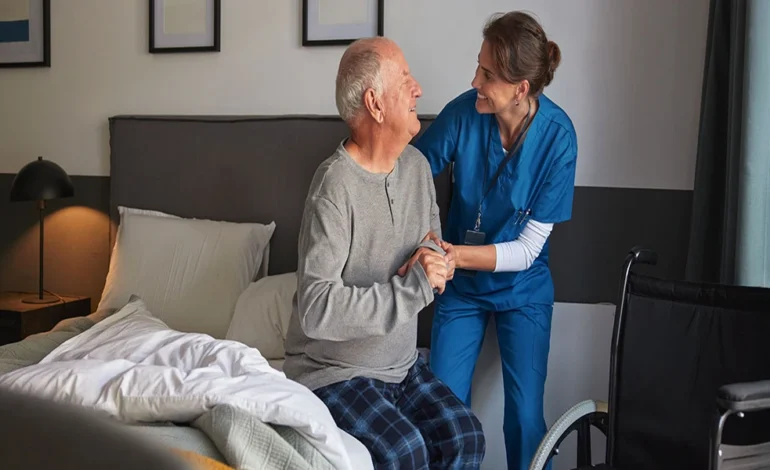
For older adults living independently or with family caregivers, many of the same principles apply in a home setting. Removing tripping hazards such as loose rugs and clutter, improving lighting throughout the home, particularly on stairs and in bathrooms, installing grab bars near toilets and in showers, and ensuring furniture provides stable support when standing up can all reduce risk significantly. Regular vision and hearing checks, reviewing medications with a healthcare provider, and engaging in strength and balance exercises, such as those found in many community-based fall prevention programs, have also been shown to meaningfully reduce fall incidence among older adults.
The Role of Education and Communication
Fall prevention is most effective when patients and families are actively involved rather than passive recipients of safety measures. Explaining why certain precautions are in place, encouraging patients to ask for assistance rather than attempting risky movements alone, and involving family members in safety planning all contribute to better adherence and outcomes. Clear communication between care teams during shift changes and transitions of care is equally important, since fall risk status can easily be lost in translation if not consistently documented and communicated.
Why Ongoing Training Supports Better Outcomes
Because fall prevention strategies continue to evolve as new research and technology become available, healthcare professionals benefit from regularly updating their knowledge in this area. Structured courses on reducing falls provide a deeper look at risk assessment tools and evidence-based interventions that can be applied directly in clinical practice.
Final Thoughts
Falls are rarely the result of a single isolated factor, but rather a combination of physical, environmental, and situational elements that can often be identified and addressed proactively. Whether in a hospital, long-term care facility, or private home, consistent risk assessment, thoughtful environmental design, and active patient engagement remain the cornerstones of effective fall prevention. Nurses working in geriatric, medical-surgical, or rehabilitation settings can earn nursing CEUs in fall prevention and patient safety, meeting their continuing education unit requirements with training that translates directly into reduced fall rates and better outcomes for the patients most at risk.