Can Eating More Fibre Help You Lose Weight?

If you have ever wondered whether eating more fibre can help you lose weight, the short answer is yes, it can be one of the most underrated tools for fat loss. Fibre will not melt fat on its own, but it changes how full you feel, how steady your energy stays, and how easily you manage cravings, all of which make weight loss far more achievable. Most people focus on cutting calories or carbs, while quietly missing the one nutrient that makes eating less feel effortless. As any best dietician in Delhi will tell you, the way you build your plate often matters more than the numbers you count, and fibre sits right at the centre of that.
In this guide, we will break down exactly how fibre supports weight loss, how much you need, and the everyday foods that make hitting your fibre goals simple.
What Is Fibre, and Why Does It Matter for Weight?
Fibre is a type of carbohydrate your body cannot fully digest. Instead of being broken down for quick energy like sugar or starch, it passes through your digestive system largely intact. That simple fact is exactly what makes it so useful for weight management.
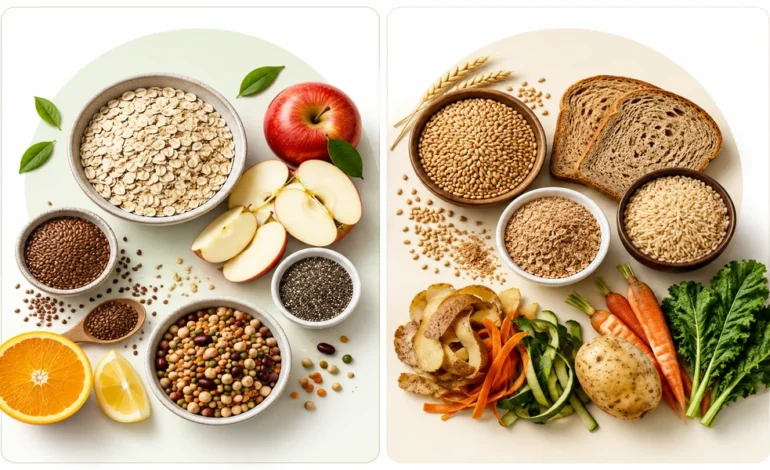
There are two broad types, and both help in different ways. Soluble fibre dissolves in water and forms a gel in your gut, which slows digestion, steadies blood sugar, and keeps you full for longer. You find it in oats, legumes, apples, guava, and flax seeds. Insoluble fibre does not dissolve. It adds bulk, supports regular digestion, and helps you feel physically satisfied after a meal. It is found in whole grains, vegetable skins, and bran.
A diet rich in both gives you the full range of benefits, which is why variety matters more than fixating on any single high-fibre food.
How Fibre Actually Helps You Lose Weight
Fibre supports weight loss through several connected mechanisms, none of which involve extreme restriction.
It keeps you fuller for longer.
High-fibre foods take longer to chew and digest, and they physically fill more space in your stomach. This means you feel satisfied with fewer calories, so you naturally eat less without forcing it. Hunger, not willpower, is what usually breaks a diet, and fibre tackles hunger directly.
It steadies blood sugar and reduces cravings.
Soluble fibre slows the release of sugar into your bloodstream, preventing the sharp spikes and crashes that trigger cravings an hour or two after eating. Steadier blood sugar means fewer sudden urges to snack on something sweet.
It feeds your gut bacteria.
Fibre acts as food for the good bacteria in your gut. A healthier gut microbiome is increasingly linked to better weight regulation, improved metabolism, and reduced inflammation. This is a quieter benefit, but a real one.
It slightly reduces calorie absorption.
Because fibre slows digestion and binds to some fats and sugars, a small portion of calories from a high-fibre meal passes through rather than being fully absorbed. The effect is modest, but it adds up over time.
It replaces empty calories naturally.
When you fill your plate with fibre-rich whole foods, there is simply less room for refined, calorie-dense options. The swap happens on its own rather than through constant restriction.
Here’s that section reworked with a table:
How Much Fibre Do You Actually Need?
Most adults fall well short of their daily fibre target, largely because modern diets lean heavily on refined flour, polished rice, and processed snacks that have had their fibre stripped away. The good news is that recommended amounts are very achievable with everyday foods. Here is a simple guide:
| Group | Recommended Daily Fibre | Notes |
|---|---|---|
| Adult women | 25 g | A practical target for most women, adjusted for activity and health |
| Adult men | 30 to 38 g | Higher needs due to greater average calorie intake |
| Children (4 to 12 yrs) | 15 to 25 g | Increases gradually with age |
| Teenagers | 25 to 30 g | Close to adult requirements |
| Pregnant or breastfeeding women | 28 to 30 g | Slightly higher to support digestion and steady energy |
| Adults over 50 | 21 to 30 g | Needs ease slightly with lower calorie intake |
These are general guidelines, and individual needs vary with body size, activity level, and health conditions. As a simple rule, building each meal around whole grains, legumes, vegetables, and fruit usually gets most people close to their target without any counting.
The Best High-Fibre Foods for Weight Loss
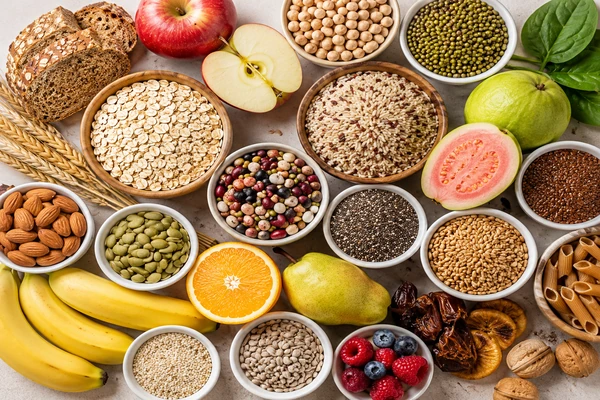
You do not need imported superfoods to hit your fibre goals. Most of the best sources are affordable, everyday staples:
- Legumes and pulses such as rajma, chana, moong, and lobia, which combine fibre with filling plant protein
- Whole grains and millets like oats, brown rice, jowar, bajra, and ragi, far richer in fibre than maida or white rice
- Vegetables, especially with skins on, including bhindi, beans, carrots, and leafy greens
- Fruits like guava, apple, pear, and berries, eaten whole rather than juiced
- Nuts and seeds such as almonds, flax, and chia, which add fibre in small, easy amounts
A simple habit that doubles the benefit is pairing fibre with protein at each meal. Fibre keeps you full, protein preserves muscle and curbs cravings, and together they make weight loss feel far less like a struggle.
Smart Ways to Eat More Fibre Without Trying Too Hard
Building more fibre into your day does not have to mean overhauling your diet. Small, consistent changes work best:
- Swap white rice for brown rice or a millet a few times a week
- Choose whole fruit instead of fruit juice
- Add a bowl of dal or beans to your main meals
- Keep the skin on vegetables and fruit where it is edible
- Stir a spoon of flax or chia into your curd or breakfast
- Snack on roasted chana, sprouts, or nuts instead of biscuits and chips
These swaps quietly raise your fibre intake while crowding out the refined, calorie-dense foods that work against weight loss.
A Word of Caution When Increasing Fibre
More is not always better, at least not all at once. Adding a large amount of fibre suddenly can cause bloating, gas, and discomfort while your gut adjusts. The fix is simple: increase your fibre gradually over a couple of weeks rather than overnight.
Hydration matters just as much. Fibre absorbs water and works best when there is enough fluid to move it through your system, so drink water consistently through the day. Without enough water, a high-fibre diet can actually leave you feeling more sluggish rather than lighter.
It is also worth remembering that fibre is one piece of the weight loss picture, not the whole solution. It works best alongside balanced meals, adequate protein, regular movement, and good sleep. If you are unsure how to bring it all together for your body, a qualified weight loss dietitian in Delhi like Avni Kaul can build a plan around your routine, food preferences, and goals. With a strong academic background and recognition as an Olympic Nutrition Advisor, Avni focuses on sustainable, evidence-based eating rather than quick fixes, which is exactly the approach a high-fibre diet rewards.
Fibre Alone Is Not a Magic Fix
It is worth being honest about what fibre can and cannot do. Eating more fibre makes weight loss easier by managing hunger and steadying blood sugar, but it does not override a diet full of excess calories, fried food, and sugary drinks. You cannot out-fibre a consistently unhealthy diet.
Think of fibre as a powerful supporting habit rather than a standalone strategy. When you combine a high-fibre diet with sensible portions, enough protein, and regular activity, the results compound. Each habit makes the others easier, and fibre is often the one that quietly ties them together.
The Bottom Line
So, can eating more fibre help you lose weight? Absolutely, when used the right way. Fibre curbs hunger, steadies blood sugar, supports your gut, and naturally crowds out empty calories, making the whole process of losing weight feel less like a battle. Build your meals around whole grains, legumes, vegetables, fruit, and seeds, increase your intake gradually, drink plenty of water, and let fibre do its quiet, powerful work.
About Nutri Activania
Nutri Activania is a Delhi-based nutrition consultancy founded by Avni Kaul, one of the city’s most respected registered dietitians and nutritionists. A Gold Medallist from the University of Delhi, Avni pairs a strong academic foundation with years of hands-on clinical experience, and her work has earned recognition at the highest levels, including a role as Olympic Nutrition Advisor at the 2018 Youth Games in Buenos Aires and the Best Dietician Award at the Fitness Excellence Awards in 2019. At Nutri Activania, the focus is on sustainable, evidence-based nutrition rather than quick fixes, helping clients lose weight, manage conditions like PCOS and diabetes, and improve their overall health through plans built around everyday Indian food. The result is a practical, personalised approach that fits real lives and delivers results that last.